In a warehouse, managing inventory effectively isn’t just about good organisation — it’s also about protecting your stock from damage and preventing avoidable losses. Damaged goods can eat into profits, disrupt supply chains, and create unnecessary stress for warehouse staff.
By putting simple solutions in place, and using the right equipment, you can significantly reduce the risk of damage to your stock, and create a safer, more efficient working environment. Let’s explore how you can make this happen in your warehouse.
Protect your racks to prevent collapses
As far as stock damage is involved, racking systems are often at the heart of the problem. According to the Occupational Safety and Health Association (the American equivalent of our Health and Safety Executive), the annual cost of rack collapse incidents is estimated at £30 billion.
Did you know that forklift collisions are responsible for 90% of pallet rack failures? Luckily, there are steps you can take to protect both your racking and your inventory, such as installing column guards and corner protectors. Shielding your racking systems and structural elements from impacts caused by forklifts can go a long way in preventing costly damage and improving the safety of your staff.
Implement traffic rules to prevent collisions
Warehouses are busy places, with people, forklifts, and trolleys sharing the space, often trying to be as quick as possible to meet targets and deadlines.
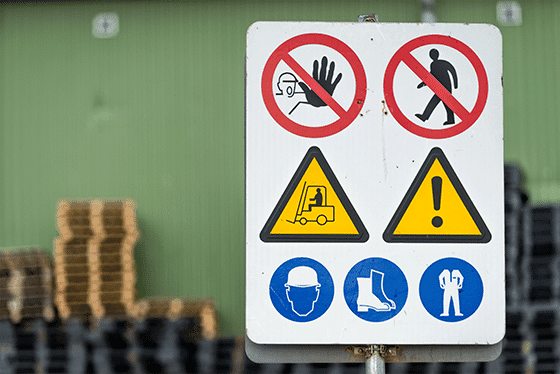
Setting clear traffic rules is key to avoiding accidents, and protecting your stock. This includes creating clear lanes for machinery and pedestrians, enforcing speed limits, and adding explicit and strategically placed warehouse signage.
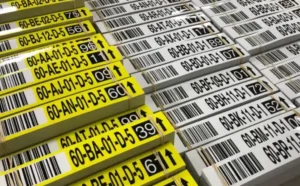
Floor labels and hanging signs, for example, can be useful in guiding traffic and reducing confusion. They’re durable, help to locate stock easily, and keep operations running smoothly, lowering the chance of collision.

Have adequate lighting to prevent errors
Poor lighting is common in warehouses, despite the fact that poor visibility can lead to incorrectly picked inventory, and collisions. Making sure that your warehouse is well-lit enables staff to navigate the space safely and spot hazards more easily.
If your warehouse is in need of a lighting upgrade, LED lights are a practical choice. They’re bright, good for energy-efficiency, and affordable; helping to improve visibility across storage areas, racking systems, and workstations.
Use Rack Netting to prevent falls
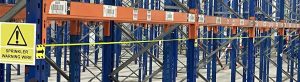
Falls from high-bay storage areas can pose serious risks to workers and lead to costly losses. An effective solution for protecting inventory and improving safety in these areas is back-of-rack netting.
This netting prevents items from falling off the back of racks, reducing product loss and protecting employees working below. Designed to withstand the weight of full pallet-loads, these nets are incredibly strong (in fact, they’re stronger than steel mesh), easy to install, and allow you to easily retrieve items that have fallen in.
Display Racking Load Notices to prevent overloading
While racking load notices are not explicitly a legal requirement, they are the industry standard to show compliance with Health and Safety legislation. The HSE requires that “racking should have a clear unambiguous notice securely fixed to it, stating the maximum load together with any necessary specified load configurations.” (as outlined in HSG76: Warehousing and Storage – A Guide to Health and Safety).
These signs provide crucial information about the maximum weight each rack can safely hold, helping staff avoid overloading that could lead to collapses. Make sure these notices are displayed prominently at eye level for maximum visibility. Conducting regular checks is equally important, to confirm guidelines are being followed and racks aren’t showing signs of wear.
Preventing stock damage isn’t always about large-scale changes. Sometimes, it’s the smaller investments that make the biggest difference. Combining tools like rack netting, column guards and floor labels with practical measures such as improved lighting, clear signage and traffic management can transform your warehouse into a safer, more efficient space.
It’s all about being proactive and putting measures in place that make sense for your warehouse. With a bit of effort upfront, you can save yourself a lot of stress (and costs) in the long run. If your warehouse is in need of a safety upgrade, please get in touch. We’re here to help!