Warehouse Labelling

Are you looking for warehouse location labels?

As your top choice for premium warehouse labels in the UK and Europe, we take pride in supplying the finest SilverBack labels renowned for their durability and longevity compared to other warehouse labelling solutions. 

Our location labelling range consists of pallet racking labels, warehouse shelf labels and even floor location labels, which have all been carefully designed to increase your warehouse efficiency and productivity. Ensuring your facilities processes, but more importantly profits, are maximised.

"I would just like to thank you, Vicky, and everyone else who has assisted in getting this order to us. It has been a fantastic service from start to finish. We received the labels in super-fast time, form order entry (1 day)."
C-P-I

Get a Labelling Quote

We don’t share your details with any third-parties.

What type of warehouse labels are you looking for?

Pallet Racking Labels

Shelf Labels

Floor Location Labels

Our Silverback™ Warehouse Labels

Our self-adhesive pallet racking labels, designed with our clever SilverBack™ technology, are built to last. Printed on durable polyethylene, SilverBack™ labels are simple to apply and offer reliable performance for both printing and scanning.

Looking to make your warehouse a little greener?

Good news! SilverBack™ labels are completely PVC-free, helping you reduce your carbon footprint without compromising on quality.

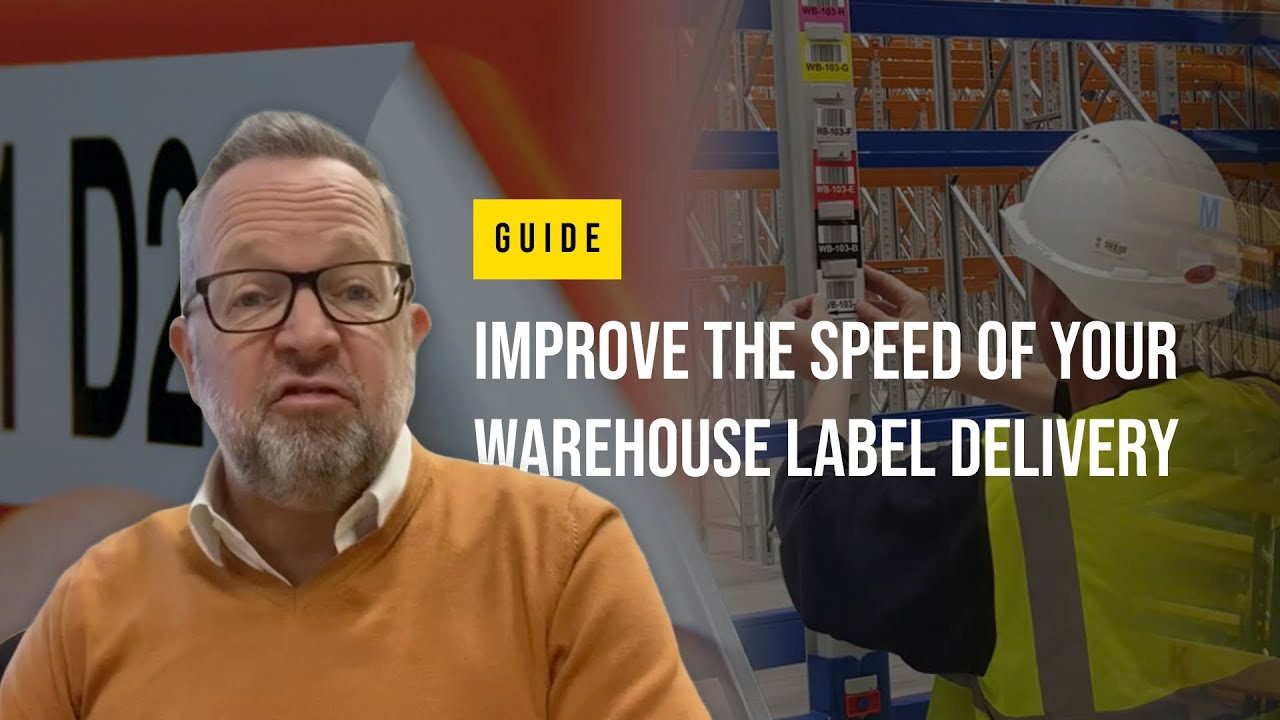
Colour-coded racking labels helping to identify locations in a warehouse.
It's more than just a sticky label

Why our warehouse labels are different?

Warehouse Labelling Videos

Playlist

11 Videos

Warehouse Labels FAQs

Below are just a few of out most frequently asked questions but you can find a lot more useful information and videos within our knowledge hub.

Our SilverBack™ labels were inspired by innovation in the paint tin industry. Originally, paint manufacturers developed a method to create consistent colour labels for their paint tins by applying a silver backing. This ensured no background colour interfered with the label’s appearance, providing an accurate representation of the paint colour. We’ve adapted this idea for the warehouse environment, where scanning precision is critical.

Yes, we handle the entire label production process in-house. We use our custom design software to ensure high barcode quality and clarity, which is essential for accurate scanning. Our setup includes two high-quality Fusion Laser Printers, two laminators, one encapsulator, and two guillotines. With this equipment and our skilled team, we’re able to maintain full control over quality and production speed. Plus, having duplicates of most equipment means we can avoid any delays in lead times if there are technical issues.

Yes, we do provide an installation service, but we don’t employ our own installers. We use training subcontractors.

We manage installation quality and progress through our operations team who are employed. We do take full responsibility for the quality of the installation through the project.

If you want to install the labels yourself, we have a guide that is free and available on Youtube: watch the video here

This depends on what we are installing the labels onto, where they are and how far apart they are. On pallet racking, two main things play a part in installation times:

If we can get a scissor lift into the aisle that enables us to install both sides of the aisle at the same time, this can literally halve the time a racking label installation can take. So in a narrow aisle situation where the beams are typically 2 m apart, 2 or 3 labels per beam and several beams in a bay we can install about 2000 labels per day for a team of 2.

When the aisle is wide at, say, 3 m, this drops to between 1000 and 1200.

Other items that slow installation down are labelling over existing warehouse rack labels or of the racking is already loaded with pallets. These 2 items usually enable some element of damaged label mitigation and restrict the use of measuring sticks, and if a pallet is already on the beam, this limits installing the label very quickly, as it gets in the way and adds a splinter risk to the installer, who subconsciously slows down so as not to get hurt.

On long span shelving accessed from ground level, the installation rate on new beams increases to approx. 2500-3300 labels per day depending on the spacing between the beam and the labels on those beams. Obviously, the further apart everything is, the longer it takes to cover that time. This might not seem a significant consideration, but saving 1 second tens of thousands of times really does add up.

In small parts shelving where labels and shelves are very close together, installation rates are at their quickest. Up to 4000 labels per day for an experienced team of 2.

Labels installed onto a concrete floor might take some time, as we usually have to lay lines of floor tape and measure out an area before we install them. Also with floor labels we may need to clean the concrete first. Somewhere between 100 and 400 per day. Without understanding what is required, estimating floor labels is quite tricky.

Aisle markers: a single person working from a lift using TEK screws and a power drill can install up to 100 aisle markers per day.

Yes, we can install location labels on external racking, but there are a few things to keep in mind:

  1. Galvanised Steel: If your racking is galvanised, ensure it’s properly degreased, as an oily residue from the galvanising process can affect the adhesive and lead to the label not adhering properly.
  2. UV Exposure: Labels exposed to sunlight may fade over time, especially in colours like red, orange, and yellow. Black tends to hold up better. To prevent fading, we recommend laminating outdoor labels.
  3. Surface Texture: A smooth steel surface is ideal for label adhesion. If the beam has a matte or rough finish, there is a smaller degree of surface contact with the adhesive, which can cause problems. In these cases, we can provide labels with a thicker adhesive layer for better adhesion.

With these three considerations in place, installing location labels on outdoor racking is generally not a problem.

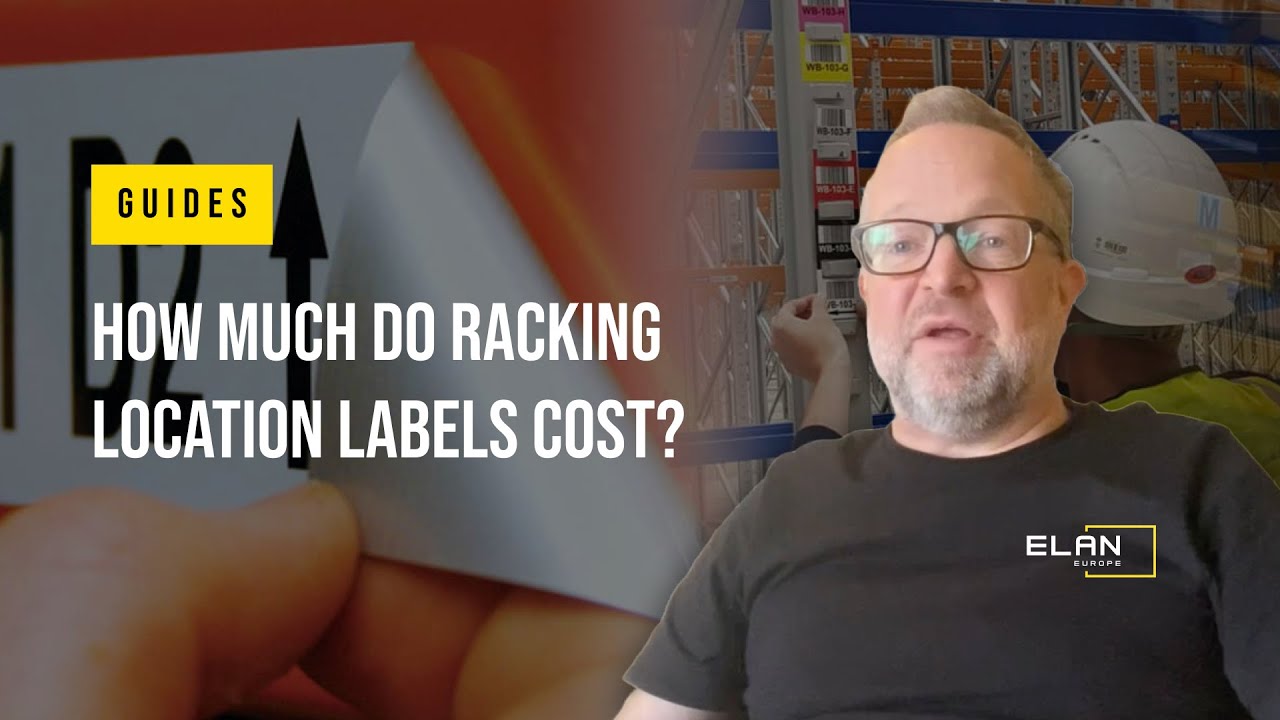
The cost of racking location labels varies depending on the quantity you order, the materials used, and any additional requirements like lamination.

Amazingly this question doesn’t come up any more. 25 years ago when location labels were either black on white or black on yellow and printed through non colour digital printers such as thermal printers we did get asked this question quite a lot but as the vast majority of location labels are now printed in colour they have become main stream.

The answer is to the question is the price difference between colour and mono location labels is about 3%.

  • Unlaminated self adhesive is 430 mm x 310 mm
  • Laminated self adhesive 410 mm x 300 mm
  • Laminated Magnetic 410 mm x 300 mm
  • Teslin Encapsulated standard or ultra hight strength adhesive 400 mm x 280 mm
  • Card insert labels 430 mm x 300 mm
  • Thermal transfer (black on white labels) 900 mm long by 150 mm wide.

As a laser printing company, we are limited to laser printer capacity which in our case is SRA3 size at 450 mm x 320 mm. By the time we have trimmed the edges to make a finished label we are able to produce the sizes above.
We do have a thermal transfer printer that we use predominantly for long range reflective labelling, but this prints up to about 900 mm and has a maximum print width of about 150 mm.

Yes, we are more than happy to help make sure you have the correct labels in your operation. We normally like to do this at quote stage so we have a QMS process to follow. This makes life easier for both you and us later on if you come to place the order with us.

Information we need to know is as follows:

What is the location reference sequence and are they numbers of letters? i.e. aisle bay level / A-01-A

Do you need an arrow to demark if the location is above or below the label?

Do you need a check digit and if so how many numbers and/or letters is it? e.g. 99 or AA or A1A1A1

Do you need a barcode? If so what does it need to read, The location only, location and check digit or just the check digit? Does it have special characters in it like the dashes or any prefixes?

And finally: colours? Do you want any colour separations to help with identifying levels or specific shelves?

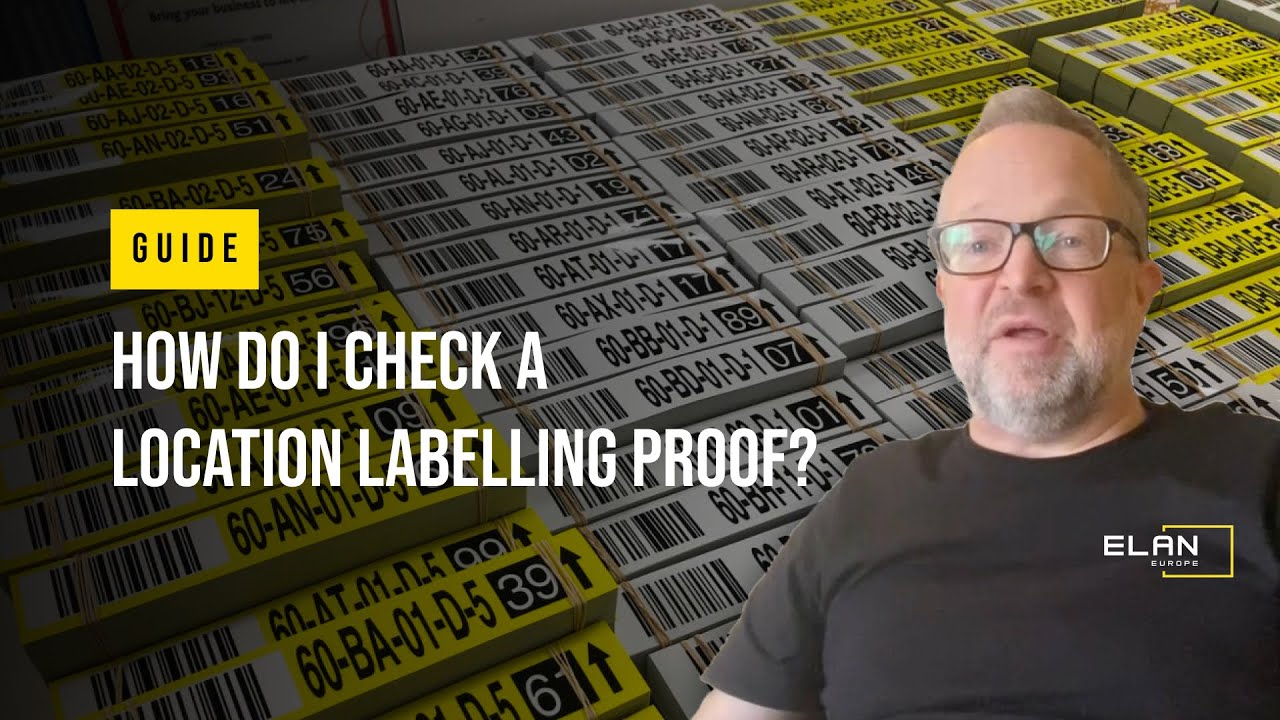
If you are looking for a complete set of label proofs with location files to check them off against we can do that without you raising an order but we would like an email of intent.

If your motivation behind this is to either make sure you don’t incur a cost before you know exactly what you are going to receive or because you are not sure exactly how many labels you need and changing the PO is difficult once it has been raised we can support these items with you.
We commit not to charge you until we have incurred a material cost, i.e. printed, manufactured or committed to an external supplier, so us working on your proof and location files isn’t chargeable, unless doing a proof or making a location file has been quoted as a specific item due to complexity or this is the only item you need completing.

We understand that administration and procedures at your end can add time and inconvenience to you and we want eliminate or at least minimise that for you.

If you need to raise the order after the job is proofed please just send us an email asking us to proceed to the proofing stage without committing to any costs and we will make the location files and design proofs for you. We can then confirm costs and you can raise the order prior to us commencing any printing and incurring costs on your behalf.

Laminated labels are not necessarily better or worse than non-laminated ones. I believe for most people it is a matter of considered choice for most customers, and here is why.

I have laminated millions of labels over 30 years and never had a single comment about lamination causing an issue with location label scanning.

Scan range issues or poor scanning performance are always down to poor-quality print, the x-dimension of the barcode being too small or the scanner not being set up correctly or having an inappropriate scan engine.

If a supplier is telling you lamination and bright lighting can detrimentally affect location label scanning, this is incorrect. It simply affects their profit margins, as they have to do 3 more processes to make the label. I have never seen a warehouse with very high lighting levels, and please see our YouTube video on scanning laminated location labels.

So to make a considered choice, let’s first of all examine why there may be a need to laminate.

All laser printing materials have a toner-receptive surface which makes them slightly matt in appearance. In order to get the laser toner to stick to the surface of the synthetic paper, it needs a slightly rough surface before it is passed through the fuser within the printer.

Subsequently, if the label is not laminated after the print process and goes to the site and is installed and is subsequently wiped over with dust on the surface, this dust gets ingrained in the label.

In addition, with the exception of anodised labels, all printed barcodes sit of the surface of the material and not within the surface of the material so lamination protects the print surface from minor scrapes.
Now I am not going to sit here and tell you that a laminated label is going to survive an impact with a fork lift truck, it isn’t so you need to consider if the labels you are using may get slightly knocked or scarped.

Back to choice again.
With rack labelling there is no detriment to having a label laminated.

Some sectors may specifically benefitted from laminating. i.e. operations that store liquids, or have any amount of dust build up, slightly more industrial say some fabrication works near by, etc.

If you feel you need it please go ahead and specify it.
The price difference is about 20-25% and sometimes just comes down to the values of the company and where you sit on quality or investment. Personally I would laminate labels but its your choice but please make it a considered one.

We provide a variety of pallet racking labels to meet different warehouse needs. Our options include self-adhesive labels, magnetic labels, and durable laminated labels. We also offer custom solutions such as barcode labels, colour-coded labels for easy sorting, and reflective labels for better scanning over long distances. These labels are designed to simplify inventory management and enhance the efficiency of warehouse operations.

Our pallet racking labels are crafted from high-quality materials to withstand tough warehouse conditions. We use strong adhesives for a secure hold and offer magnetic backing for easy attachment to metal surfaces. Our SilverBack labels feature a reflective surface for easy scanning. These durable materials ensure that the labels remain readable and effective, even in challenging environments like chilled storage areas or busy high-traffic zones.

Selecting the right size and type of pallet racking labels depends on factors like racking dimensions, visibility needs, and data requirements. Larger labels are ideal for high-visibility areas or where information needs to be read from a distance. Barcode or QR code labels are useful for electronic inventory tracking. Make sure the labels fit the racking dimensions and consider their durability in warehouse conditions. ELAN can help assess your needs and recommend the most effective labels for your warehouse.