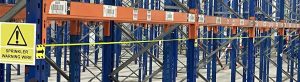
Back-of-rack netting is an essential safety feature for high-bay racking, helping to prevent loose items from falling and improving the safety of warehouse staff.
However, installing netting isn’t always as simple as attaching it to existing racking. Depending on your setup, you may need additional components to ensure a secure and effective fit.
In this guide, we’ll cover the key items you may need to add to your racking in order to fit back-of-rack netting properly, including frame extensions and netting standoffs.
Frame Extensions for Back-of-Rack Netting
In some cases, your existing racking may not have the necessary height or structure to accommodate netting securely. If the top pallet extends above the racking structure, you may need to extend the frame to provide adequate attachment points for the netting. There are two main ways to do this:
Frame extension kits
The first solution is to approach the racking manufacturer and acquire a frame extension kit. This typically consists of two pieces of the frame joined together with a front plate. However, this method has its limitations: it’s not the strongest solution, and you’ll also need an extension at the back to provide proper bracing.
Box section extensions
Alternatively, we can provide a box section that slides inside the top of the existing frame. This option utilises the bracing holes at the back, allowing us to secure three or four fixings, which is typically a much stronger solution than a frame extension kit.
While both options work, a box section extension is our preferred choice for added strength. However, if you already have frame extension kits, they are still a perfectly adequate solution.
Incorporating netting into the racking design
The ideal scenario is to plan for netting requirements during the racking design phase. If you know that netting will be needed, incorporating the necessary height and bracing from the beginning can save time and effort later.
Manufacturing a frame extension kit
If you need us to manufacture a frame extension kit, we’ll need some details from you. Ideally, we need to know the racking manufacturer and frame design, as we’ll be making something that installs into the top of the frame. The more detail we can get, the better: a drawing from the racking manufacturer is ideal, but if that’s not available, some measurements will help. If you’re unsure, we can visit your site and take the measurements ourselves.

Netting Standoffs for Back-of-Rack Netting
Standoffs determine how far the netting sits from the racking, allowing space for pallets and stored goods. The right standoff depends on your storage setup and safety requirements.
Flush-fitting
The closest possible standoff is a flush fit, where the netting is cable-tied directly to the racking frames and beams. In this setup, a cable runs along the top and bottom, secured with carabiners and cable ties. This method eliminates the need for any offset and is suitable for setups where goods do not extend beyond the racking.
Standard standoff brackets
If an offset is required, standoff brackets are available in 50 mm increments, up to 250 mm. The standoff sizes we supply are:
- 100 mm
- 150 mm
- 200 mm
- 250 mm
A 50 mm offset is rare, as it typically aligns with the pallet overhang. Most warehouses opt for brackets 100 mm or longer.
Custom standoff solutions
For offsets beyond 250 mm, a bespoke frame may be required. This is because longer brackets can create an excessive cantilever effect on the racking, and cause damage to the structure. So if a larger offset is needed, a custom solution can be designed to distribute the load safely.
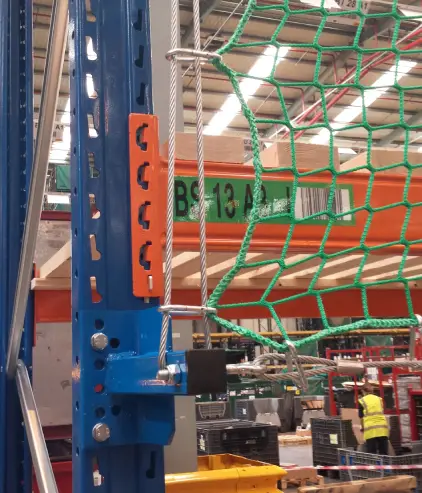
Making sure your back-of-rack netting is installed properly isn’t just about the net itself. Frame extensions and standoffs are important for securing the netting and positioning it correctly.
By choosing the right frame extension and the correct standoff, you can ensure your netting system is both secure and effective for your warehouse setup.
If you’re unsure about what you need, we’re happy to help! Whether that’s offering advice or visiting your site to assess your setup and recommend the best solution. Contact us today to enquire.