Warehouse safety and organisation are critical, and netting has become a go-to solution for preventing accidents, protecting workers, and keeping operations running smoothly. But not all netting is the same, and choosing the right type for your warehouse can make a big difference.
In this post, we’ll break down the three main types of warehouse netting: mezzanine or handrail netting, back-of-rack netting, and debris netting. You’ll learn what each type is, how it’s used, and the specific benefits it offers. By the end, you’ll have a clear idea of which netting solutions could make your warehouse safer and more efficient.
Mezzanine or handrail netting: keeping elevated areas safe
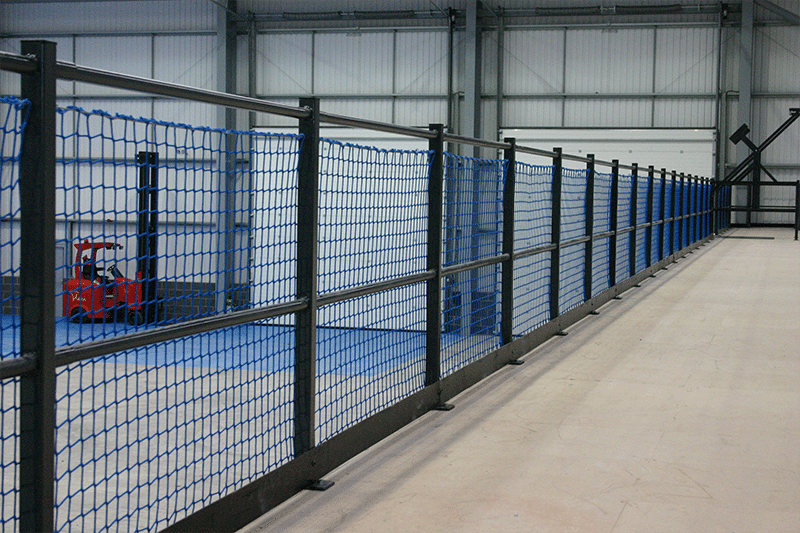
Mezzanine or handrail netting is used around raised platforms, walkways and storage areas to prevent items or equipment from falling to the floor below. It can be attached using cable ties or carabiner clips, depending on your operational preferences (for example, if you need to take the netting down often for any reason, we recommend using carabiner clips).
Key Benefits
- It improves safety by stopping tools, materials or indeed workers from falling down from mezzanine levels and injuring themselves or endangering the area below.
- It’s versatile and suitable for warehouses, manufacturing facilities, or even retail spaces with mezzanines.
- It can be customised and designed to match your mezzanine’s layout, ensuring it fits seamlessly with your setup.
Use Cases
- Surrounding mezzanine storage areas.
- Enclosing walkways above busy warehouse areas.
- Making handrails/staircases more secure.
Back-of-rack netting: protecting workers and inventory
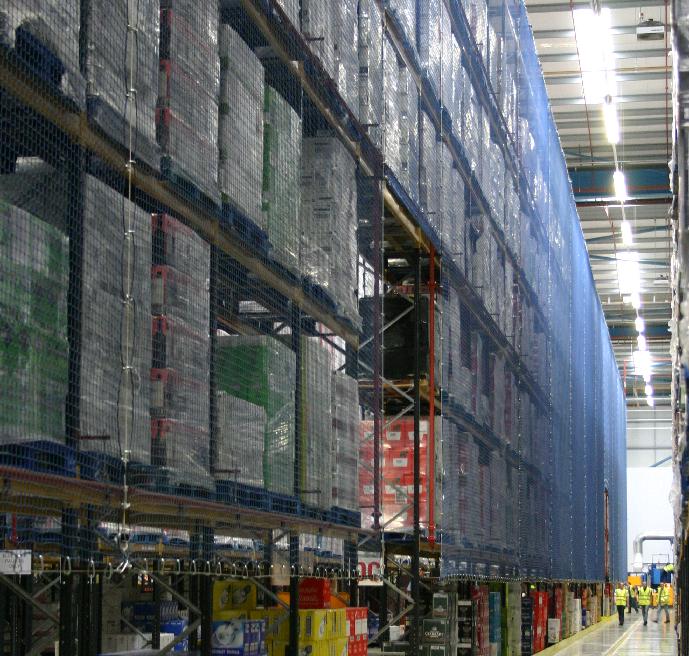
As the name suggests, back-of-rack netting is installed behind racking systems to prevent items from falling into walkways, where they could pose a risk to workers. As with handrail netting, a key consideration during installation is whether you’ll need to remove the netting periodically for maintenance or other reasons. If so, we recommend using carabiner clips for easy removal. However, if the netting will remain in place without the need for frequent access, cable ties are a solid choice and perfectly suitable for securing the netting.
Key Benefits
- It prevents accidents by protecting employees from falling goods.
- It improves organisation by stopping products from slipping out of place, keeping stock where it should be and preventing inventory loss.
- It’s proven to be more efficient than alternatives such as steel mesh. Studies show that netting is faster to install, easier to adapt to different rack layouts, and more effective than steel mesh. It doesn’t require heavy tools or cutting, saving time and hassle. Check out this video comparison to see how netting stacks up against steel mesh.
Use Cases
- Aisles next to picking and packing zones where goods might shift.
- Storage areas holding bulky items prone to movement.
- Behind tall racking to prevent goods from falling from heights into walkways or areas with machinery.
Debris netting: stopping small items before they become hazards
Debris netting is designed to catch small and lightweight items falling from ceilings into workspaces, machinery, or walkways below. It’s commonly used in industrial and construction environments to protect workers and equipment from small debris like flaking paint, ceiling tiles, small masonry, or insulation that can cause issues if they come loose.
Debris netting works best when installed directly beneath the area where debris might detach, which ensures that falling items don’t build up too much momentum. While it’s ideal for catching lightweight debris, it’s not suitable for heavier objects (over 10kg). Make sure your building’s anchor points are strong enough to handle the energy transferred by falling debris, as the netting stretches to absorb the force.
Key Benefits
- It prevents disruptions and accidents by catching debris before it can cause injury or damage.
- It’s very durable thanks to highly resistant materials such as polypropylene, meaning it won’t require much maintenance, and you won’t need to replace it often.
- It offers financial benefits by preventing repair costs caused by falling debris.
Use Cases
- Protecting walkways or work areas in warehouses with older ceilings prone to flaking paint or loose tiles.
- During construction or renovations, to catch small debris from scaffolding or overhead areas.
- Over machinery or conveyor systems, ensuring debris doesn’t interrupt operations or cause damage.

Why warehouse netting is worth it
Warehouse netting is more than just a safety feature, it’s a way to keep your operations running smoothly and protect the people who make it happen. Whether it’s mezzanine netting for elevated spaces, back-of-rack netting to secure goods, or debris netting to keep things clean and safe, the right choice depends on your unique setup.
By understanding the types of netting available and what they’re best suited for, you’re now equipped to make a decision that promotes safety, saves time, and keeps your warehouse compliant. Investing in the right netting means fewer accidents, more organisation, and a smoother operation overall.