
Ceiling netting for warehouses and industrial spaces
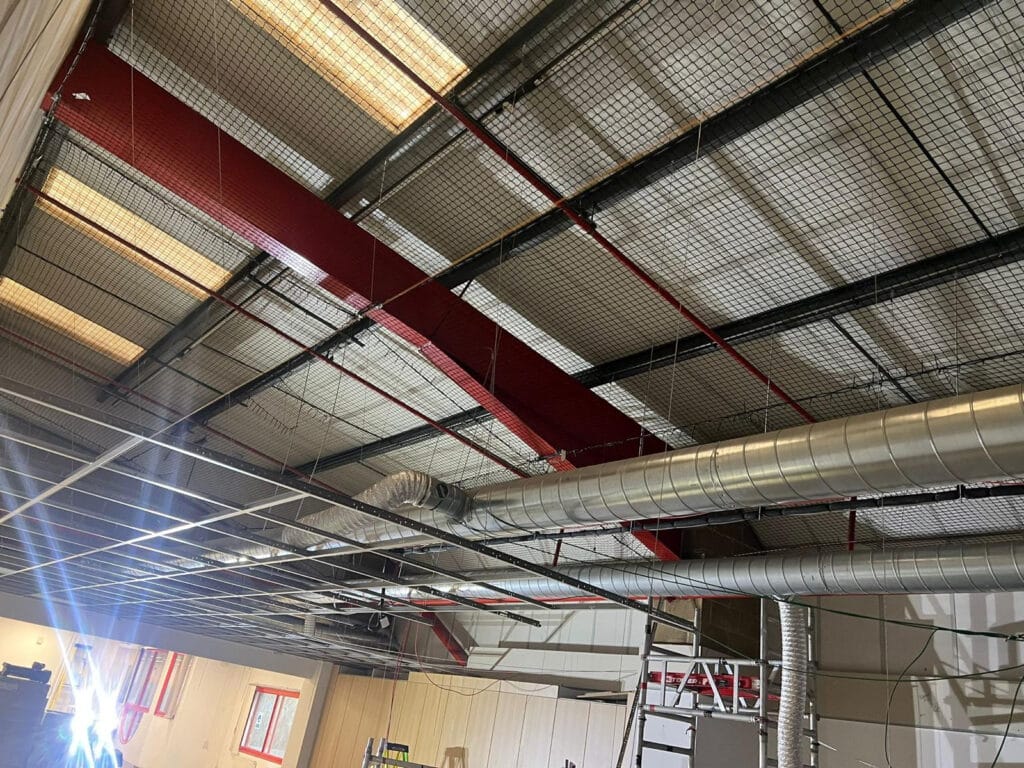
Debris netting is a safety solution designed to stop small and lightweight items from falling from ceilings into workspaces, machinery, or walkways below. Commonly used in industrial and construction settings, it provides critical protection by catching materials such as flaking paint, small masonry, ceiling tiles, or insulation that may come loose over time.
When installed horizontally, debris netting is most effective if positioned directly beneath the area where debris may detach. A shorter distance between the ceiling and the net reduces the momentum built up by the falling item, minimising its force on impact. This helps ensure that all debris is safely caught by the net, preventing accidents or disruptions below.
It’s important to note that debris netting isn’t suitable for catching larger or heavier objects weighing 10 kilos and up, in which case, a more robust system is required.
As part of our wider warehouse safety netting range, we also offer handrail netting and rack netting, ensuring comprehensive coverage across your facility for maximum safety and compliance.
Download Datasheets
Want to learn a little bit more about our Debris Netting Solutions? Download one of our FREE datasheets.

Why correct installation matters
When an object falls, gravity accelerates it, increasing its kinetic energy as it drops. The greater the height, the more energy is generated, meaning that heavier objects, even falling from just a metre, can exert significant force on impact.
Netting helps absorb this energy by stretching and distributing the force over a wider area. However, the energy also transfers through the netting into the building’s structure, so attachment points must be strong enough to withstand this force without failing. This is similar to catching a heavy object. You may be able to hold it easily, but catching it while it’s in motion is much harder and may even cause injury because of the extra energy it has gained.
That’s why, in some cases, netting is installed vertically to control rather than stop the fall of objects. When vertical installation isn’t an option, as with ceilings, the net must be placed as close as possible to the potential falling object to reduce the force before it gains too much momentum.
Is debris netting right for you?
- You’re trying to catch lightweight items such as flaking paint, insulation or ceiling tiles
- You intend to place the netting directly below the ceiling, with ample room for the net to stretch and absorb the shock
- Your building has anchor points that are strong enough to absorb the impact of falling debris
- You’re trying to catch heavy objects such as pallets or stock (what you need is rack netting!)
- You plan on placing the netting directly above head height, for example above a walkway
- Your building is old and your anchor points may fail to support the impact of an item falling into the net

Ceiling debris netting specification, rental and contract installation
Once you’ve determined that a ceiling debris net is suitable for your project, and if you lack the resources in-house, you’ll need a qualified contractor to carry out the installation for you.
The contractor must be able to adequately assess the risks, dynamic loads and energy forces involved, as well as identify the installation method and fixings that best suit your building.
With a variety of fixings, ropes, and wires available, your installer should also consider the appropriate netting capacity and mesh dimensions for the job.
Please note that it is also possible to rent netting. Contact us to enquire.
Debris Netting FAQs
Is debris netting a legal requirement?
While not always a specific legal requirement, Health and Safety regulations mandate taking adequate steps to protect employees and equipment from falling debris. Installing debris netting can be a practical solution to meet these safety standards.
Can debris netting be customised for specific projects or spaces?
Absolutely. We offer custom netting solutions tailored to the dimensions, weight specifications, and unique needs of your space. Speak to us at the point of placing your order to discuss your requirements.
What maintenance is required for debris netting?
Polypropylene netting is extremely hard-wearing and requires little to no maintenance. That being said, regular inspections are recommended to check for wear and tear, particularly in high-traffic or harsh environments. If the netting is exposed to outdoor elements, you may also want to ensure it’s free of debris buildup.
Can I install debris netting myself, or do I need professional help?
While small-scale projects might seem manageable, we always recommend using a professional installer to ensure the netting is properly fitted and secured. The risks associated with incorrect installation, especially in industrial settings, make it worth hiring qualified contractors.
Can I rent debris netting?
What other types of warehouse netting are available?
There are different kinds of warehouse netting, each with a specific use. Back-of-rack netting stops items from falling off the back of storage racks. Handrail netting is used on raised walkways to prevent objects from dropping onto people below. Debris netting is for catching smaller items or loose bits that might fall, which is handy in construction or repair areas. Each type of netting helps protect workers, equipment, and stock in different situations.
Is debris netting suitable for all types of debris?
Debris netting is designed primarily for lightweight debris, such as insulation, ceiling tiles, or loose masonry. It’s not recommended for heavy materials or items weighing more than 10kg, as these could exceed the netting’s tensile strength or cause the anchor points to fail. For projects involving mixed types of debris, ELAN Europe can guide you to the best solution based on your specific requirements.
What is debris netting made of?
Debris netting is typically made from polypropylene, which is extremely durable and resistant to wear. This ensures the netting can withstand exposure to harsh environments, including UV rays, moisture, and temperature fluctuations, although it may need replacing more often in outdoor settings.
How close should the netting be to the ceiling?
Debris netting should be installed as near as possible to the debris source, just beneath the ceiling or overhang where materials may loosen or fall. Placing the netting close to the source stops falling items from building up too much momentum, ensuring the netting can contain them effectively. Proper placement also depends on the specific area’s structure and safety requirements. We’re happy to offer advice on which setup would provide maximum efficiency.
How much does debris netting cost?
It’s difficult to provide an idea of cost without first conducting a site survey. However, we’re more than happy to discuss your needs and provide an estimate, or a detailed quote. Feel free to reach out to our team for expert advice tailored to your project.