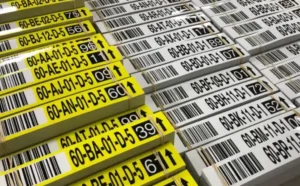
Warehouse safety isn’t simply about adding more signs, barriers or warning systems. It’s about understanding where the risk occurs, why it occurs and what will actually influence behaviour at the point it matters.
In some areas, a clear visual warning may be enough. In others, physical separation is needed. And there are situations where an operator may benefit from an additional warning or physical cue before they reach a hazard.
The most effective approach is rarely about choosing one type of safety system over another. It’s about selecting and sometimes combining the right measures for the specific risk.
Visual warehouse safety systems help people recognise hazards and make safer decisions, while physical systems create separation or provide a physical intervention. Neither is automatically better: the right approach depends on the location of the hazard, the people or equipment exposed and the consequences if a warning is missed.
So, how do visual and physical safety systems differ, and where does each approach work best?
Visual Warehouse Safety Systems
Safety signage, floor markings, high-visibility markings and other visual controls are fundamental to warehouse safety. They can:
- Highlight hazards
- Define pedestrian and vehicle routes
- Identify restricted areas
- Communicate instructions
- Make equipment and infrastructure more visible
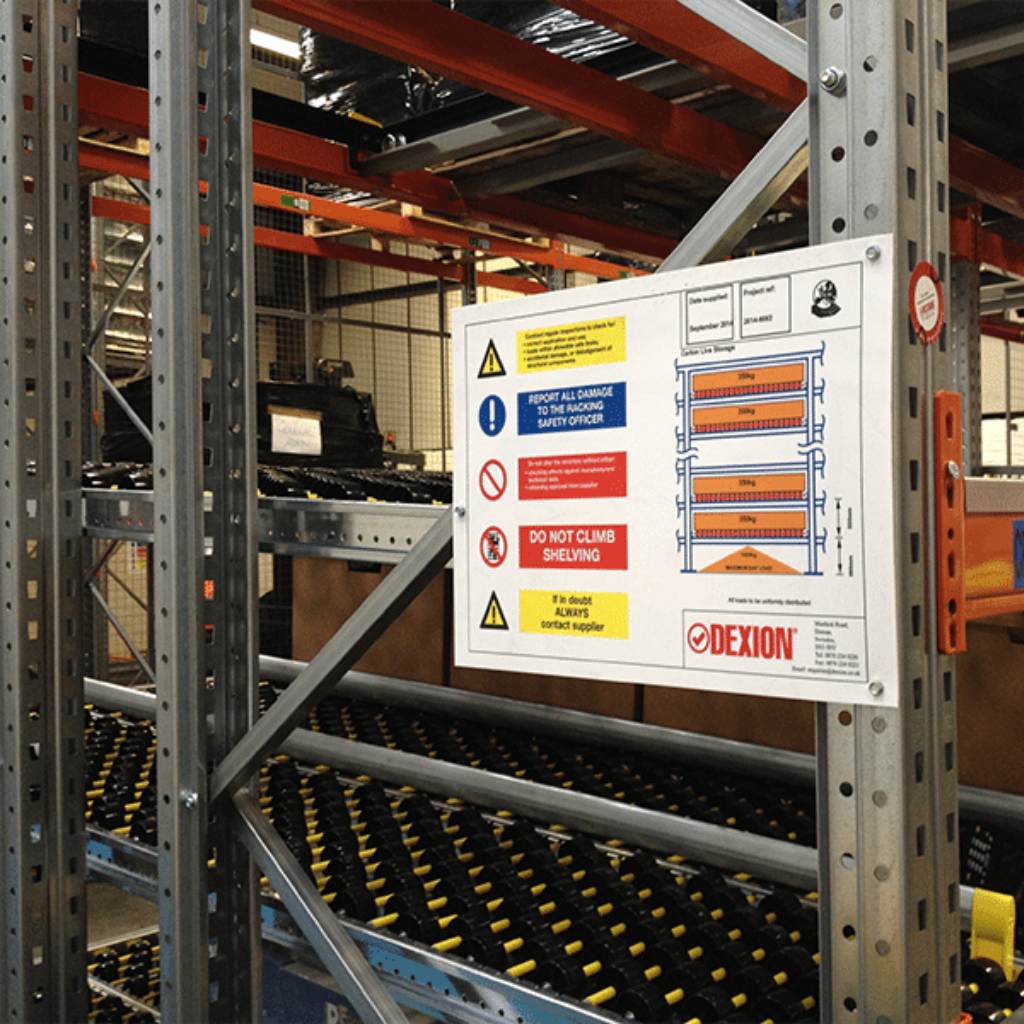
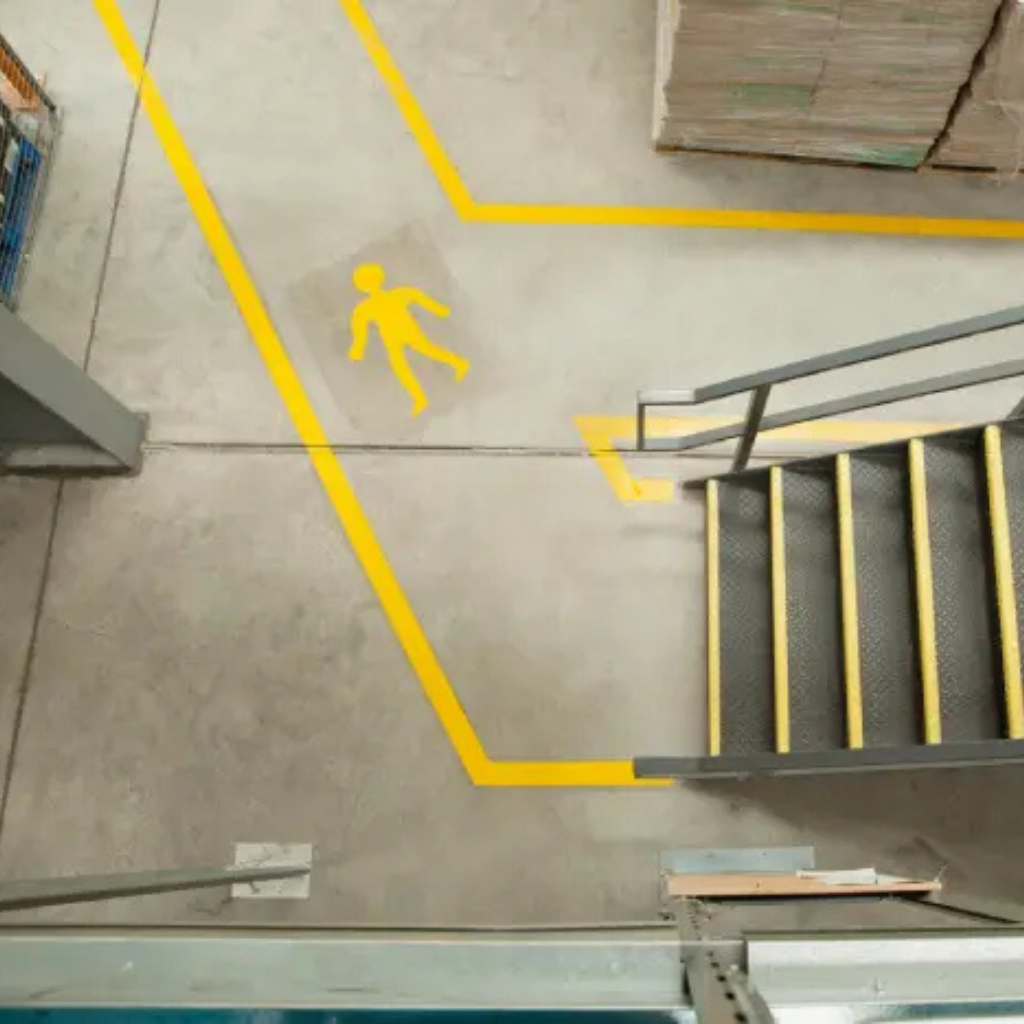
A well-positioned visual system gives operators the information they need to make safer decisions, but visual systems rely on one important thing: the warning has to be seen, understood and acted upon.
In a busy warehouse, operators may be simultaneously concentrating on loads, pedestrians, racking, vehicles and their immediate surroundings. That means there are situations where visual communication should form part of a wider safety solution rather than being the only control in place.
Physical Warehouse Safety Barriers
Where the consequences of contact are greater, physical separation may be more appropriate. Pedestrian barriers, bollards, guard rails and rack protection can create a clear physical boundary around vulnerable areas.
Unlike signage, these systems don’t simply communicate that a boundary exists, they reinforce it physically. They can be particularly effective where vehicle and pedestrian routes meet or where equipment at ground level is vulnerable to impact. However, a barrier isn’t automatically the right answer for every hazard.
Warehouse layouts, access requirements, available space and the position of the infrastructure all need to be considered. A system that works well at floor level, for example, may not address a hazard several metres above it.
Physical vs Visual Warehouse Safety Systems at a Glance
Safety system | Primary purpose | Examples | Important limitation |
Visual systems | Communicate or highlight a hazard | Signs, floor markings and high-visibility markings | Must be seen and acted upon |
Physical barriers | Create separation or protect an area | Bollards, guard rails and pedestrian barriers | May not suit overhead hazards or restricted spaces |
Active warnings | Alert people when a risk is detected | Sensors, alarms and proximity systems | Still requires an appropriate response |
Tactile warnings | Provide physical feedback before a hazard is reached | Tensioned warning systems | Must be correctly positioned for the application |
Warehouse Sensors and Proximity Warnings Systems
Sensors and proximity warning systems provide another form of intervention. Rather than waiting for an operator to notice a static warning, these systems can generate an audible or visual alert when a vehicle or person enters a defined area.
This can be valuable where risks change depending on movement or proximity, but, like signage, an alert still requires the operator to recognise it and respond appropriately.
The question therefore shouldn’t simply be:
“What safety product can we install?”
A more useful question is:
“At what point do we need to influence the operator’s behaviour?”
Tactile Feedback
Some warehouse risks benefit from another type of intervention: something the operator can physically feel. Tactile warning systems introduce physical feedback before the operator reaches the hazard itself.
This can be particularly useful where a hazard is difficult to protect using conventional barriers or where visibility alone may not provide sufficient warning.
The principle is simple:
See the warning.
Respond to the warning.
If it is missed, provide another opportunity to react.
Rather than relying on a single method of communication, different forms of feedback can work together.
Choosing the Right Safety System for the Risk
There isn’t a single warehouse safety measure that is right for every situation. The appropriate solution depends on several factors:
Consideration | Question to ask |
Location of the hazard | Is it at ground level, overhead or within the racking? |
Type of traffic | Are forklifts, pedestrians or both exposed to the risk? |
Visibility | Is the hazard easy for operators to see during normal activity? |
Available space | Can a conventional physical barrier be installed? |
Potential consequence | What happens if the warning is missed? |
Operator behaviour | At what point can the operator realistically react? |
This is why warehouse safety should be considered as a system rather than a collection of individual products. Signage might identify the hazard. A barrier might create separation. A sensor might provide an active warning. A tactile system might introduce another opportunity for the operator to respond.
In some situations, one measure will be sufficient. In others, a layered approach may be more appropriate.
A Practical Example: Protecting Overhead Sprinkler Infrastructure
Sprinkler pipework above or within pallet racking is a good example of a risk that doesn’t always fit neatly into conventional warehouse protection. The infrastructure is above ground level, so traditional floor-mounted barriers may not address the risk. Signage and high-visibility markings can warn forklift operators, but these still rely on the warning being noticed while the mast or load is raised.
The challenge therefore becomes:
How can you give the operator another opportunity to react before the forklift reaches the sprinkler system?
This was the thinking behind Elan Europe’s SprinklerShield™ Racking Safety Wire.
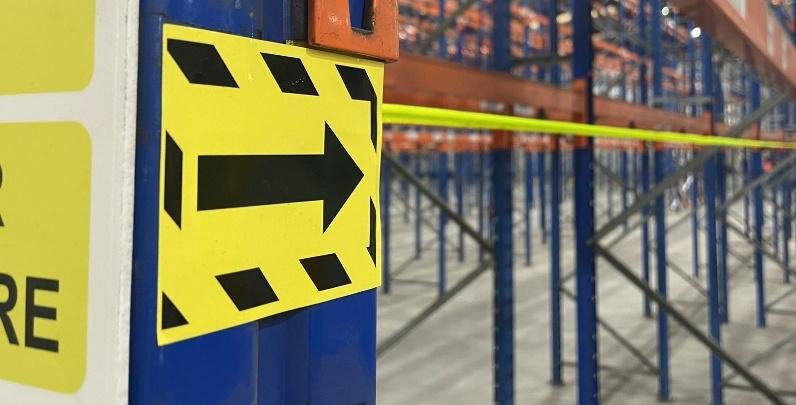
A high-visibility tensioned wire is positioned below vulnerable sprinkler infrastructure. It creates a visual reference point for operators, but importantly, if a raised mast or load contacts the wire, the operator receives physical feedback before reaching the sprinkler pipework.
The solution isn’t intended to act as a conventional protective barrier. It is designed to intervene earlier in the sequence of events. Rather than relying on one type of warning or protection, it combines visibility with physical feedback to address a specific operational challenge.
It’s a good example of why the starting point should always be the application and the problem you’re trying to solve, not simply the product you want to install.
If you’re looking for a solution to a warehouse identification or protection challenge, talk to the Elan Europe team about your requirements:
Frequently Asked Questions
What is a visual warehouse safety system?
A visual warehouse safety system uses signs, floor markings, colours or other visible indicators to highlight hazards, communicate instructions and define routes or restricted areas.
Are physical barriers better than warehouse safety signs?
Not necessarily. Physical barriers create separation, while signs communicate information and warnings. The appropriate choice depends on the hazard, warehouse layout, traffic movements and the consequences of contact. In some areas, using both may provide a more suitable solution.
When might layered warehouse safety approach be appropriate?
A layered approach may be appropriate when the consequences of missing a warning are significant or when one type of control cannot adequately address the risk. This could combine signage, physical separation, active warnings or tactile feedback.
Got a question?
We don’t share your details with any third-parties.